Module 41.6: Writing Compelling Reports that Lead to Sales
Crafting reports that effectively drive sales involves more than just presenting information. It requires creating content that engages readers, highlights value, and guides them toward taking action. Here’s how to write compelling reports that not only captivate your audience but also lead to conversions:
Step #1. Identify Your Target Audience
Understand Their Needs: Before you start writing, clearly define who your target audience is and what their specific needs, challenges, and interests are. Tailor your content to address these factors directly.
Example: “If you’re targeting small business owners, focus on topics that address their unique pain points, such as cost-effective marketing strategies or productivity tips.”
Step #2. Start with a Strong Executive Summary
Summarize Key Points: Begin your report with a concise executive summary that highlights the main findings, benefits, and recommendations. This provides readers with a quick overview of what they will gain from the report.
Call to Action: Include a call to action (CTA) in the summary to guide readers on the next steps, whether it’s contacting your sales team, scheduling a demo, or downloading additional resources.
Example: “In this report, discover the top 5 strategies for increasing online sales by 30%. Contact us today to learn how we can help you implement these strategies and drive growth for your business.”
Step #3. Highlight the Benefits and Value
Focus on Outcomes: Emphasize the benefits and value your solutions provide. Rather than just listing features, explain how these features address the reader’s needs and deliver tangible results.
Use Case Studies: Include real-life case studies or success stories that demonstrate how your product or service has successfully solved similar problems for other clients.
Example: “Our client, XYZ Corp, saw a 25% increase in lead conversion rates after implementing our targeted marketing solution. Learn how you can achieve similar results by exploring the strategies outlined in this report.”
Step #4. Use Persuasive Language
Engaging Tone: Write in a persuasive and engaging tone that resonates with your audience. Use language that builds trust and confidence in your expertise.
Benefit-Driven Headlines: Create headlines and subheadings that highlight the benefits and value of your content. This keeps readers focused on how the information will help them.
Example: Instead of “Product Features,” use “How Our Product Can Save You Time and Boost Your Efficiency.”
Step #5. Include Clear and Actionable Recommendations
Practical Advice: Offer clear, actionable recommendations that readers can easily implement. Break down steps or strategies into manageable actions to help readers see how they can apply the information.
Actionable CTAs: Use specific and compelling calls to action throughout the report to guide readers toward taking the next step, such as requesting a consultation or making a purchase.
Example: “To start optimizing your marketing strategy today, schedule a free consultation with our experts. Click here to book your appointment now.”
Step #6. Leverage Visuals and Data
Visual Appeal: Use charts, graphs, and infographics to present data and insights in a visually appealing way. This helps make complex information easier to understand and more engaging.
Data-Driven Insights: Include relevant data and statistics that support your recommendations and showcase the potential impact of your solutions.
Example: “Our report includes a detailed chart showing the average ROI for businesses using our software compared to competitors. See how our solution outperforms the rest and drives better results.”
Step #7. Address Objections and Provide Solutions
Anticipate Concerns: Address potential objections or concerns that readers might have. Provide clear, well-reasoned responses and demonstrate how your solution overcomes these objections.
Reassurance: Offer guarantees, testimonials, or evidence that reinforces the effectiveness and reliability of your solution.
Example: “Worried about implementation costs? Our solution offers a flexible pricing plan and a dedicated support team to ensure a smooth and affordable transition.”
Step #8. Include Testimonials and Endorsements
Social Proof: Incorporate testimonials, endorsements, or quotes from satisfied customers or industry experts. This builds credibility and trust in your product or service.
Real Experiences: Share specific experiences or results that highlight the positive impact of your solution on other clients.
Example: “Jane Doe, CEO of ABC Ltd., says, ‘The solution provided by [Your Company] transformed our operations and increased our revenue by 40%.’”
Step #9. Ensure a Professional Presentation
Polished Design: Ensure that the report is professionally designed with a clean layout, consistent branding, and high-quality visuals. A well-presented report reflects positively on your company.
Error-Free Content: Proofread the report thoroughly to eliminate any spelling, grammar, or formatting errors. A polished, error-free report enhances credibility.
Example: Use a consistent color scheme and font style throughout the report, and include a clear, professionally designed cover page.
Step #10. Provide Multiple Contact Options
Easy Access: Make it easy for readers to get in touch with you. Include multiple contact options such as phone numbers, email addresses, and links to schedule consultations.
Follow-Up: Offer follow-up options or next steps to keep the engagement going and ensure readers can easily take action based on the report’s content.
Example: “Ready to see how our solutions can work for you? Contact us at [Phone Number], email [Email Address], or click here to schedule a free consultation.”
By applying these strategies, you can create reports that not only inform but also persuade and convert. A compelling report engages readers, demonstrates value, and guides them toward making a purchase or taking another desired action.
 L et's say you've got two marketers... Jamie and Alex. They’re both in the same market, selling a very similar kind of product. Same niche, similar audience size, nothing fancy... maybe a few thousand followers, a small email list, some likes and thumbs up here and there.
 Mistake #1 - They create offers based on what they 'think' sells, not what people want to buy.

 This powerful first module dives deep into the hidden forces that drive people to take action. Before you can create an offer that converts like crazy, you need to understand how your audience thinks, feels, and decides. That’s where consumer psychology comes in. You’ll explore exactly what makes an offer feel “irresistible” (even if it’s not the cheapest or most popular), and how to align your messaging with the way people are wired to respond.
 Lesson 1.1: What Makes an Offer Irresistible
 In this module, you’ll discover the essential strategies for turning cold prospects into ready-to-buy leads. Most people don’t make a purchase the first time they hear about you—and that’s completely normal. That’s why you need to warm them up with value and connection before you ever ask for a sale. (Think of it like dating before proposing...) This module shows you exactly how to do that.
 This module guides you through the step-by-step process of creating your core offer—the main product or service that drives your business forward. Whether you're just starting or refining an existing offer, you'll learn how to build something your audience can’t ignore. We’ll start by defining what your core offer should actually be, then show you how to build real, perceived value into every piece of it.
 This module reveals one of the easiest ways to increase your revenue—without getting new customers. Order bumps are those small, optional add-ons that show up right before someone checks out. (Think of it like adding a candy bar at the register—it’s quick, easy, and tempting.) When done right, they can massively boost your average order value.
 In this exciting module, you’ll discover how to use One-Time Offers (OTOs) to create a powerful sense of urgency and boost your revenue—right at the moment when your customer is most ready to buy. These are limited, “only available right now” offers that show up immediately after someone makes a purchase. (It’s like asking, “Would you like fries with that?”—but way more profitable.)
 This module is all about rescuing sales that would otherwise slip through your fingers. A downsell is a smart, lower-priced alternative shown when someone says no to your main offer. (Think of it like saying, “If that’s too much, how about this instead?”) Done right, downsells can recover lost revenue and turn hesitant visitors into happy buyers.
 In this revenue-boosting module, you’ll learn how to use Second Upsells to unlock even more value from every sale you make. These are offers that appear after a customer has already accepted a first upsell—while they’re still in the buying mindset. (It’s like saying, “Since you liked that, you’ll love this.”) When used correctly, second upsells can significantly raise your average order value without feeling pushy.
 This module shows you how to use $1 trial membership offers to get more people through the door—even if they’re not ready to commit to a full purchase yet. The idea is simple: lower the risk and let them try before they buy. (It’s like a test drive for your membership or product.) When positioned correctly, this tiny offer can lead to long-term, high-value customers.
 In this high-impact module, you’ll discover how to craft and launch lifetime membership offers that deliver long-term value for your customers—and upfront revenue for you. These offers give buyers forever access to your products or content for a one-time payment. (It’s the ultimate “buy once, benefit forever” deal.) When done well, lifetime memberships can generate large cash infusions while reducing churn and support costs.
 In this final module, you’ll learn how to use cross-sells on your thank you page to boost sales after the purchase is complete. Most people think the sale ends at checkout—but that’s actually a prime moment to introduce more value. (Your customer just said yes—they’re already in buying mode!) Cross-sells let you offer a related product or service that makes their original purchase even better.
 This module teaches you how to use bundling to dramatically increase the perceived value of your offers—without having to create something new. Bundling means packaging related products or services together into one irresistible deal. (It feels like getting more for less, and that’s exactly why it works.) When used strategically, bundles can boost conversions, increase order value, and make your offer stand out in a crowded market.
 In this high-energy module, you’ll learn how to run powerful firesale events that drive fast results and inject instant revenue into your business. A firesale is a short-term, high-intensity promotion that offers deep discounts for a very limited time. (Think: massive value, limited availability.) When done right, it taps directly into your audience’s fear of missing out and gets them to act now—not later.
 This module shows you how to tap into seasonal offers to boost visibility, engagement, and sales by syncing your promotions with the times your audience is already looking to buy. Whether it’s a holiday, back-to-school season, or end-of-year push, aligning your offer with a seasonal moment creates a natural reason to buy now. (People expect deals during these times—so give them one they can’t resist.)
 In this smart and resourceful module, you’ll learn how to re-launch old products to create fresh momentum and new revenue—without starting from scratch. If you’ve got a product that once performed well (or maybe never got the spotlight it deserved), a re-launch gives you the chance to reintroduce it with stronger messaging, better positioning, and a more engaged audience. (It’s often easier to refresh than to rebuild.)
 This action-packed module teaches you how to write email promotions that get opened, clicked—and drive sales. When launching a special offer, your email list becomes your most powerful sales channel. (It’s direct, personal, and full of people who already know you.) But to make it work, you need more than just “announcements”—you need strategic, persuasive email campaigns that build momentum and excitement.
 In this momentum-building module, you’ll discover how to use time-sensitive offers to get your audience to act now instead of later. People often delay decisions—but when they see that time is running out, their motivation skyrockets. (It’s a powerful psychological trigger that’s been proven to increase conversions.) By adding urgency to your offer, you create a reason to buy today.
 This powerful module shows you how to use price increases as a smart sales strategy—not just a revenue adjustment. Most people fear raising prices, but when you do it the right way, it can actually increase conversions, boost urgency, and position your offer as more valuable. (Yes, charging more can help you sell more—when paired with the right message.)
 In this exciting module, you’ll discover how to run dime sale events—a unique pricing strategy where the price automatically increases with every purchase. This creates a real-time sense of urgency that makes people buy now, before the price goes up again. (It’s part social proof, part scarcity, and all about momentum.)
 In this relationship-focused module, you’ll learn how to reward customer loyalty in ways that feel personal, meaningful, and drive repeat business. It’s much easier (and cheaper) to keep a customer than to get a new one—especially when they feel seen, appreciated, and valued. (Loyal customers don’t just buy again—they tell others, too.)
 In this results-driven module, you’ll learn how to create powerful landing pages (also known as bridge pages) that warm up your audience before they ever see an affiliate offer. Instead of sending people straight to a product page, these pages pre-sell the offer, build trust, and increase the chances they’ll say yes. (Think of it as setting the stage for the perfect pitch.)
 This trust-building module teaches you how to create affiliate review pages that go beyond basic summaries and actually influence buying decisions. A well-written review does more than just describe a product—it tells a story, builds confidence, and helps readers feel like they’re making a smart, informed choice. (People want to buy—but they need to trust you first.)
 In this conversion-boosting module, you’ll learn how to create bonus packages that make your affiliate offers feel 10x more valuable—without changing the core product at all. In a crowded marketplace, bonuses are what help you stand out, build trust, and give buyers that final push to click your link instead of someone else’s. (It’s the difference between a “maybe” and a “YES!”)
 In this profit-boosting module, you’ll learn how to confidently reach out to vendors and negotiate higher affiliate commissions—so you can earn more from the same promotions you’re already running. Most affiliates never ask for a raise, but vendors are often willing to pay more to top performers. (Especially when you know how to show your value.)
 This foundational module shows you how to create lead magnets that grab attention, build trust, and fill your funnel with high-quality leads who are ready to buy. A great lead magnet offers immediate value in exchange for an email address—and when it’s done right, it can jumpstart your entire sales process. (It’s your first impression, so make it count.)
 In this smart, strategic module, you’ll learn how to create a low-ticket evergreen offer that not only brings in paid leads, but also qualifies your audience by attracting serious buyers from day one. Instead of giving everything away for free, this type of offer helps you offset ad costs, build trust, and identify the people who are most likely to invest more later. (Think of it as a paid lead magnet—with profit potential.)
 In this conversion-focused module, you’ll learn how to design a high-performing shopping cart and checkout process that helps you capture leads, reduce cart abandonment, and boost your sales. The truth is, most people don’t drop off because of price—they leave because the checkout is confusing, clunky, or lacks trust. (Fixing this one piece can dramatically improve your bottom line.)
 This milestone module walks you through creating your signature offer—the core product or program that becomes your flagship, your brand, and your legacy. A signature offer isn’t just another product; it’s the main solution you want to be famous for. (It’s what your audience will remember you for—and come back to again and again.)
 In this advanced module, you’ll learn how to craft and sell high ticket offers that bring in significant revenue with fewer sales. High ticket offers aren't just expensive—they’re deeply transformational and built to solve big problems for clients who are ready to invest. (And yes—there’s a loyal audience willing to pay more if you show them why it’s worth it.)
 This module teaches you how to systemize your high ticket sales process so you can consistently close big deals—without relying on yourself to do everything. Selling high ticket offers takes a personal touch, but with the right systems and team in place, you can scale without burning out. (It’s about turning conversations into conversions—on autopilot.)
 In this conversion-driven module, you’ll learn how to use webinars to present, persuade, and sell your offers at scale. Webinars combine the trust of live interaction with the power of storytelling and education, making them one of the most effective tools for selling both digital and high ticket offers. (When done right, a single webinar can outperform weeks of sales emails.)
 In this dynamic module, you’ll learn how to create sales videos that grab attention, build trust, and convert viewers into customers. Video is one of the most persuasive sales tools available—it lets people see you, hear your message, and connect emotionally with your offer. (And with the right script, it can do all the selling for you.)
 This hands-on module shows you how to create video demos and walkthroughs that clearly show your product in action—which builds trust, reduces confusion, and makes people feel confident about buying. When your audience can see exactly how something works, they’re far more likely to believe it can work for them. (No guessing, no skepticism—just clarity and proof.)
 This trust-building module teaches you how to use social proof to instantly boost credibility, reduce buyer hesitation, and dramatically increase conversions. When people see others having a great experience with your product, they’re far more likely to buy it themselves. (It’s the “if it worked for them, it’ll work for me” effect.)
 In this trust-focused module, you’ll learn how to use guarantees and promises to eliminate doubt, overcome objections, and make your offers feel safe and irresistible. When people know there’s little to no risk, they’re far more likely to take action. (An iron-clad guarantee can be the final nudge someone needs to say “yes.”)
 This results-driven module teaches you how to choose the right pricing strategy for every product you offer—whether it’s low-ticket, high-ticket, physical, or digital. Price is more than just a number—it sends a message about your product’s value, and when used strategically, it can boost conversions, revenue, and customer satisfaction. (Price too low, you lose profit. Price too high without proof, you lose trust.)
 In this service-driven module, you’ll learn how to set up a customer support desk system that not only solves problems fast, but also boosts conversions and customer loyalty. Great support isn’t just about fixing issues—it’s about creating a positive experience that makes people want to come back and buy again. (In fact, support can be your secret sales weapon.)
 This practical module shows you how to handle product refunds with professionalism, clarity, and confidence—so you can protect your business and your customer relationships. Refunds are a normal part of doing business, but how you handle them can make the difference between losing a buyer forever or earning their long-term trust. (Refunds done right can actually boost your brand reputation.)
 In this retention-focused module, you’ll learn how to minimize membership cancellations by creating a better, more engaging experience that keeps members invested and excited to stay. It’s not just about delivering content—it’s about building relationships, adding value consistently, and giving people a reason to stay long term. (When members feel seen and supported, they don’t leave.)
 In this efficiency-boosting module, you’ll learn how to automate your customer support to save time, reduce overwhelm, and still deliver exceptional service. Smart automation lets you answer questions faster, solve common issues on autopilot, and keep your team focused on the conversations that really matter. (But don’t worry—we’ll show you how to keep it human, too.)
 This strategic module shows you how to use loss leader offers to attract new customers fast—even if it means losing money upfront. A loss leader is a low-cost (or even break-even) offer designed to build trust, create momentum, and open the door to higher-ticket sales. (When people experience real value early on, they’re more likely to buy again—and spend more.)
 In this audience-building module, you’ll learn how to create and distribute free reports that generate traffic, build trust, and lead readers directly into your sales funnel. Free reports work because they provide instant value—and when done well, they position you as the expert and make people eager to learn (and buy) more. (It’s like giving away a taste before the full meal.)
 In this income-leveraging module, you’ll learn how to create and distribute Master Resell Rights (MRR) products that allow others to sell your content—while you continue to earn through embedded affiliate links. With the right setup, MRR lets you multiply your reach, grow your list, and generate passive income at scale. (It’s like having a sales army promoting your brand.)
 In this high-leverage module, you’ll learn how to create free online tools and software that attract steady traffic, generate leads, and open the door to passive sales. People love tools that solve quick problems—and when you provide one for free, they stick around, engage, and share it with others. (Your tool becomes a traffic magnet that works around the clock.)
 In this growth-focused module, you’ll learn how to launch your own Pay Per Lead (PPL) program—where affiliates send you qualified leads, and you pay only for results. It’s a powerful way to scale your audience and sales without running ads or doing all the outreach yourself. (Think of it as performance-based marketing where everyone wins.)
 In this momentum-building module, you’ll learn how to recruit affiliates who actively promote your products and drive sales—without you having to lift a finger beyond setup. Affiliates are powerful growth partners who bring in new customers, expand your reach, and scale your revenue through performance-based marketing. (You only pay when they deliver results!)
 In this relationship-driven module, you’ll learn how to promote your affiliate program and attract motivated partners who are excited to share your offers. A successful affiliate program doesn’t grow by itself—it grows when you intentionally connect with the right people, make it easy for them to promote, and build long-term trust. (The right JV partner can bring in hundreds of sales.)
 In this strategic module, you’ll learn how to offer 100% commissions to affiliates as a powerful way to explode your list, attract top promoters, and drive massive exposure for your funnel. While it may seem risky to give away all the upfront revenue, this strategy works because it helps you build a high-value buyer list and generate profits from back-end offers, upsells, and long-term customer value. (You give more now to earn way more later.)
 In this final module, you’ll learn how to create a powerful affiliate hub—a centralized platform where all your offers, tools, and training come together to make it easy and profitable for affiliates to promote you. Instead of scattering links and resources, your hub becomes a one-stop shop for onboarding, tracking, and scaling affiliate success. (When affiliates are supported and organized, they promote more—and sell more.)
 In this optimization-focused module, you’ll learn how to use customer feedback to improve your offers, build stronger relationships, and increase your long-term success. Listening to your audience isn’t just good service—it’s smart business. (The people buying from you often have the best ideas for what to fix, enhance, or build next.)
 In this results-driven final module, you’ll learn how to track, analyze, and optimize your sales funnel metrics to uncover what’s working—and scale it with confidence. Knowing your numbers isn’t optional—it’s the key to smarter decisions, higher profits, and predictable growth. (You can’t improve what you don’t measure.)
 This analytical module breaks down the key performance metrics you need to monitor and improve in your sales funnel offers—so you can make smart, data-driven decisions that lead to real growth. It’s not just about watching numbers—it’s about knowing which numbers to watch and what to do with them. (Your funnel tells a story—this module teaches you how to read it.)
 In this visibility-focused module, you’ll learn how to track and improve the key SEO metrics that drive more organic traffic—and convert that traffic into qualified leads and customers. SEO isn’t just about getting to the top of Google—it’s about staying there, earning clicks, and delivering content that keeps visitors engaged. (If you can measure it, you can improve it.)
 Here’s what I need you to know — and really hear this, because it matters… You’re a LOT closer than you think.
 You're now one step closer to building an online business that you've always wanted. Our products were created for marketers so you're getting REAL content that you need and can refer back to time and time again.


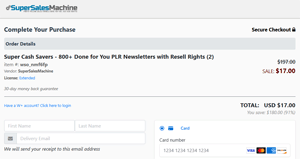
 Security Notice: We kindly advise you to NOT close this window during checkout. You will be redirected to the WarriorPlus secured checkout page as shown in the image. To purchase simply enter your name, delivery email address and payment details in the order form.
 It's been a long road since 2008 and all the other programs I've learned from over the years and I gotta say... I've seen some platforms loaded with content in my days and there have been a lot of professionally built systems in place that can help you grow a business if you work hard, but wow! Just when you think you've seen all there is to Super Sales Machine, you get introduced to a whole other page of awesome, detailed lessons to learn from. There are even some tricks you share that I wish I had learned from you 12 years ago when I first started online.
  I just have to say that I am extremely Pleased & Truly Blown Away By Your Products & Services & Just how much actual value & worth that you get out of all of them!. I have seen many, many different online companies charging buko-bucks for systems & services as these, with not even a quarter of the value or worth that you get here at "Super Sales Machine!"... & As Its Name states, it truly says it all!...
  The videos are straight to the point, easy to understand and cover a vast array of topics aimed specifically at the inexperienced Internet Marketer. All of the most common questions and issues are covered, plus many which are less common too and being in video format they are much better at describing exactly how to undertake each task than the written word.
 Selling products online can be an exhausting and frustrating experience if you don't have a good business model and a good suppler of proven products to go along with your delivery system. There are a lot of components that have to come together in order to achieve success. Finding a profitable niche is the first step, and then selecting the right products for that niche sometimes takes more luck than a clever strategy, but when you finally connect with a good one, and all the pieces come together, then it's like hitting a slot machine for the first time. It really pays off well! What a great feeling.
  I am new here but... it's sadly true that I have been dilly dallying with online income opportunities for many years and have not made more than $25... now that is truly embarrassing... But I am a true fighter no matter how much my friends and family laugh at me.. I know there will be a time when I will be successful so that is the reason I am here. My present status is retired and disabled U.S marine...Also retired school teacher. I have two children and I'm presently divorced. I promise to give the Super Sales Machine my undivided attention. Thank you for caring for us "Newbies". I was born raised in the Memphis Tennessee...The home of "Rock and Roll" singer Elvis Presley and the city of the blues.
 I wish I have found this earlier. I could've save years trying to make money online. I almost spent 10 years trying different ways to make money online, no wonder why I didn't make a sale? I lacked the knowledge in doing so, but when I found this, it all makes sense. I just found the " JEWEL " that teach me step by step. All the missing pieces of the puzzle, the core foundation is here at my finger tip.